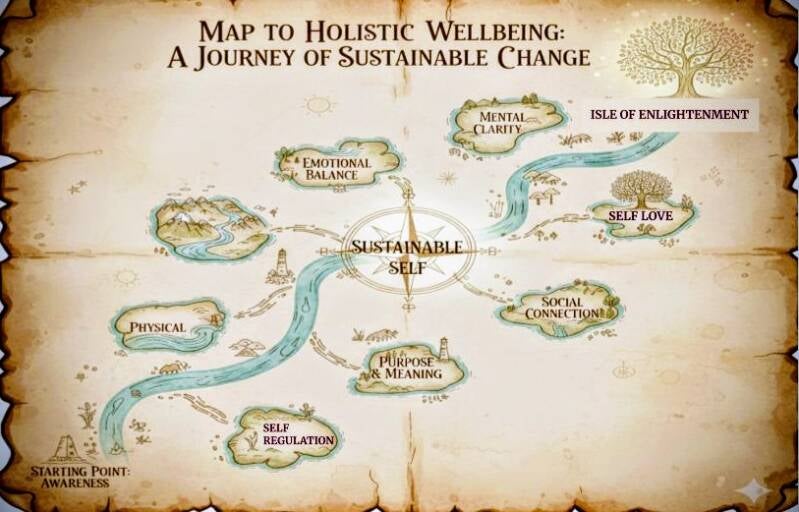
Most people think change comes from discipline, routines, and willpower. But lasting transformation feels very different. It’s less about forcing outcomes and more about nurturing the parts of yourself that create momentum naturally.
You’re not just a physical body trying to reach goals. You’re a mind-shaping meaning, and a spirit interpreting life through emotion and connection. When all three are supported, change stops feeling like effort and starts feeling like alignment.
This is the essence of holistic well-being: tending to the full ecosystem of who you are so each part strengthens the others.
Pillars of Your Well-Being
1. Body — Stability & Energy
Your physical world sets the foundation. When your body is rested, nourished, and grounded, everything else becomes easier. Sometimes the smallest physical shifts create the biggest emotional relief.
A helpful reflection:
What single physical habit would give me noticeably more energy?
2. Mind — Clarity & Focus
Your thoughts shape your experience long before your actions do. The mind can become cluttered with worry, comparison, or overthinking, and yet clarity is often only one small intentional practice away.
A helpful reflection:
What thought pattern or belief is draining my energy right now?
3. Spirit — Connection & Fulfillment
This pillar includes your emotions, your relationships, your sense of meaning, and your inner guidance. It’s the part of you that needs gentleness, beauty, rest, creativity, and genuine connection.
A helpful reflection:
Which relationship (including with myself) needs attention or tenderness?
When you approach your life through these three pillars, you stop treating your goals as isolated check boxes. Instead, you create a supportive ecosystem where each part of you naturally fuels the others.
A well-rested body makes clarity easier.
A calm mind makes emotional connections easier.
A supported spirit makes physical habits easier.
This is how sustainable change actually happens — quietly, steadily, from the inside out.
Your Holistic Mapping Exercise
Here’s a simple way to begin, without turning your life into a project or schedule. Choose a quiet moment and journal using these three prompts — one for each pillar:
- Body: What is one physical shift that would noticeably improve how I feel during the day?
- Mind: What is one mental habit I could soften, re-frame, or release?
- Spirit: What is one connection I want to nurture more intentionally?
As you reflect, don’t think in terms of “goals” or deadlines. Think in terms of support. Think in terms of what feels good, stable, or relieving.
Your aim is not perfection — it’s alignment.
Turning Reflection Into Gentle Action
Once you’ve identified your three insights, you can translate them into small, meaningful practices. Nothing dramatic. Nothing forced. Just supportive steps that help you feel more like yourself.
For example:
- A body practice might be a consistent bedtime, drinking more water, a daily walk, or stretching in a clean, calm corner of your home.
- A mind practice might be a morning check-in, a boundary with distractions, or ten minutes of focused breathing and meditation.
- A spirit practice might be a weekly screen-free hour with someone you love, or simply choosing a hobby that brings joy.
And here’s the secret:
The goal isn’t the outcome — it’s the alignment you cultivate by tending to yourself.
When alignment becomes the priority, outcomes take care of themselves in surprising and effortless ways.
A Final Thought
This framework is not a system of self-discipline. It’s a process of remembering.
You are a whole being — physical, mental, emotional, spiritual. When you care for each part, even in small ways, you create a life that feels coherent, stable, and deeply satisfying.
Not because you forced change…
But because you supported the version of you who naturally creates it